

Health & Fitness
Fueling Longevity: Why Your VO2 Max Deserves Attention
Tiffany Gust, NBC-HWC · October 31, 2026
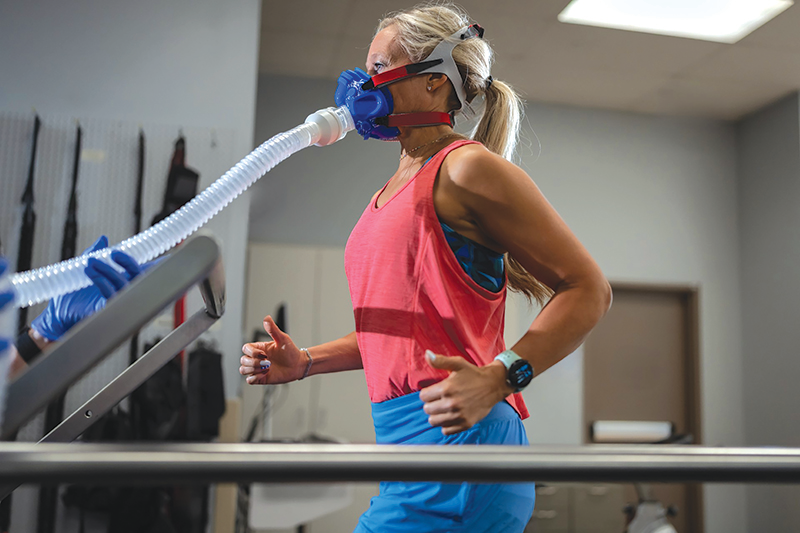
VO2 max, or maximal oxygen consumption, refers to the maximum amount of oxygen that you can utilize during intense or maximal exercise. This measurement is considered the best indicator of cardiovascular fitness and aerobic endurance. The more oxygen a person can use during high-level exercise, the more energy that person can produce.
The VO2 max test is the gold standard for determining cardiorespiratory fitness because the muscles need oxygen for prolonged aerobic exercise, and the heart must pump adequate amounts of blood through the circulatory system to meet the demands of aerobic exercise. VO2 max does not just measure how fit you are; it measures how well vital body systems function together. Experts consider it one of the most powerful biomarkers of healthy aging.
According to Harvard Health, VO2 max can enhance performance, independence, recovery, and potentially longevity at any age. Think of VO2 max as the size of your aerobic engine. The larger your engine, the greater your capacity for endurance performance.
Are you a VW Bug or a Porsche?
Many factors can influence VO2 max, including heredity, training, age, gender, and body composition. VO2 max declines with age, about 2 percent per year after age thirty, and males typically have a greater oxygen-consumption value than females. Nevertheless, the general trend is that a higher VO2 max allows a person to produce more energy and thereby perform more work. VO2 max is the “goldstandard” measure of overall fitness.
VO2 max is also a predictor of performance, although its correlation with athletic success in endurance sports is only 30 to 40 percent. Other factors include a sustainable lactate threshold, motivation, and training. In general, however, the higher the VO2 max, the greater the potential for successful performance in an aerobic endurance event.
According to a meta-analysis by Scribbans et al. published in the International Journal of Exercise Science, exercise training at a variety of intensities increases maximal oxygen uptake, the strongest predictor of cardiovascular and all-cause mortality. Exercise-training programs consisting of extended-duration continuous exercise at a moderate intensity have long been known to improve VO2 max.
VO2 Max Sample Workouts
Typical VO2 max intervals last from one to five minutes, with active recovery lasting 50 to 100 percent of the duration of each repetition. A workout may include a total of 10 to 20 minutes at VO2 max.
Shorter running intervals: Complete 10 to12 repetitions of 400 meters, with active recovery between repetitions lasting the same amount of time as each repetition. A one-to-one ratio of work to recovery is beneficial. Cyclists can benefit from incorporating the following sample workouts:
• Shorter intervals: Complete 8 to 12 repetitions of 1.5-minute hills, with an active downhill recovery lasting the same amount of time as each repetition.
• Longer intervals: Complete 4 to 5 repetitions of four-minute efforts on flat terrain, with three to four minutes of active recovery at approximately 50 percent of lactate threshold before beginning the next repetition.
Depending on the duration of the workout and your current level, recovery after a VO2 max session will take between 36 and 48 hours.
Heart Rate Recovery (HRR)
A common question is when VO2 max peaks. For most athletes, it peaks in the late twenties or early thirties and then begins to decline by roughly 10 percent per decade. However, research shows that intense exercise can improve VO2 max.
The recommendation is to check with your doctor and continue to engage in exercise that will strengthen your cardiovascular system, which, in turn, will help you remain active and keep moving into your later years.
The Sports Performance Department at Intermountain Health offers Sports Performance Assessments that include VO2 max, Resting Metabolic Rate (RMR), and Functional Fitness Assessments. Call 435-251-2256 to schedule an appointment.
Listen to Tiffany’s podcast, A Great Indicator for Longevity: VO2 Max, at https://open.spotify.com/episode/0IgiOhOHJ6ilmYRDZaJqc4
About the Author
