

Mind & Body
Gua Sha: From Traditional Chinese Medicine to Modern Self-Care
Dr. Yana Symonenko · October 31, 2026
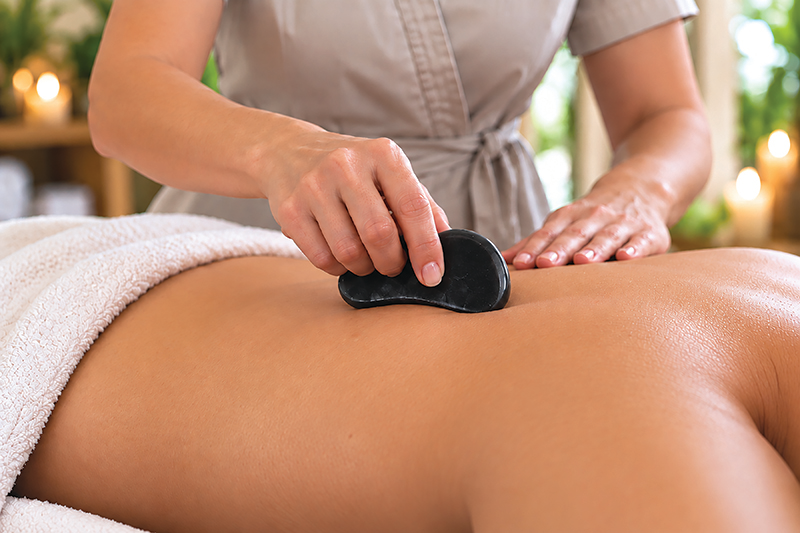
Self-care is an essential part of maintaining balance and supporting overall well-being. While professional health care treatments provide immediate relief and sometimes long-lasting help, many traditional healing practices encourage individuals to become active participants in their own health journey. Within Chinese medicine, self-care is viewed as a way to support the body’s natural ability to restore balance, maintain harmony, and cultivate vitality. For centuries, practices such as tai chi and qigong, Chinese dietary therapy, abdominal and lymphatic massage, acupuncture, cupping therapy, and gua sha have been used to promote circulation, relieve tension, and support overall health. Among these therapies, gua sha stands apart for its use of a smooth-edged tool applied with deliberate, rhythmic strokes to encourage circulation, relieve tissue tension, and promote healing.
Although gua sha has gained recognition in modern wellness settings, especially for facial rejuvenation, its roots extend thousands of years into traditional Chinese medicine. Historically used to address pain, muscle tension, and patterns of stagnation within the body, gua sha continues to serve as both a therapeutic treatment and a powerful self-care practice that connects ancient healing wisdom with the needs of modern life.
What Is Gua Sha?
Gua sha is a traditional healing method in which a smooth-edged tool is used to repeatedly stroke lubricated skin. The word “gua” translates as “to scrape” or “to stroke,” while “sha” refers to the temporary redness or discoloration that may appear after treatment. In Chinese medicine, sha is viewed as a manifestation of stagnation that has accumulated within the tissues.
The repeated stroking action stimulates microcirculation in the skin and underlying tissues, helping to increase blood flow, improve lymphatic movement, and promote the body’s natural repair mechanisms. Unlike bruises caused by injury, the redness that develops during gua sha is an intentional therapeutic response. Patients often notice reduced muscle tension, increased range of motion, and a sense of relaxation following treatment.
Gua Sha for Musculoskeletal Health
One of the most common applications of gua sha is the treatment of musculoskeletal pain and dysfunction. Modern lifestyles often require hours of sitting, driving, computer work, and repetitive movements, all of which can contribute to muscle tension, restricted mobility, chronic pain patterns, and postural imbalances such as forward head posture and rounded shoulders.
Traditionally, gua sha may be performed along muscle groups, acupuncture channels, or specific treatment areas based on the individual’s symptoms and pattern of imbalance. The treatment is commonly used for neck and shoulder tension, low back pain, sports injuries, sciatica, plantar fasciitis, repetitive strain injuries, and stress-related muscle tightness. From a modern perspective, gua sha appears to increase blood flow and tissue oxygenation while improving myofascial mobility. For many patients, it serves as an excellent complement to acupuncture, stretching, rehabilitation exercises, and other therapies designed to restore healthy movement.
Gua Sha for Headaches, Facial Nerve Support, and Tension Patterns
In clinical practice, gua sha is often used alongside acupuncture as a supportive therapy for certain neurological and pain-related conditions. Bell’s palsy, for example, is characterized by sudden weakness or paralysis affecting one side of the face due to dysfunction of the facial nerve. From a Chinese medicine perspective, this condition is often associated with an obstruction in the flow of qi and blood through the facial channels. Gentle gua sha techniques applied to the neck, shoulders, and surrounding tissues may help improve circulation and reduce muscular tension as part of a comprehensive treatment plan.
Similarly, gua sha is commonly used for tension headaches and chronic headache patterns that are associated with tightness in the neck, shoulders, and upper back. By releasing muscular tension and encouraging healthy circulation, gua sha may help reduce discomfort and promote relaxation. Many of my patients report improved mobility and fewer tension-related headaches when the therapy is incorporated into their wellness routines. Some have reported that even a two-minute morning gua sha routine can make a big difference in their day.
Gua Sha for Facial Rejuvenation
Although gua sha has long been used as a therapeutic treatment for pain and musculoskeletal conditions, it has also gained popularity as a natural approach to facial rejuvenation. Facial gua sha involves the gentle, repeated gliding of a smooth-edged tool, usually a green jade or rose quartz stone, across the face and neck to stimulate circulation, encourage lymphatic drainage, and release tension held within the facial muscles. Unlike more invasive cosmetic procedures, facial gua sha works by supporting the skin’s natural functions and promoting healthy tissue vitality. Many people incorporate it into their self-care routines as a preventive practice to maintain skin health and encourage graceful aging.
As we age, circulation naturally slows, collagen production decreases, and facial muscles may become either chronically tight or increasingly lax. These changes can contribute to puffiness, dullness, sagging skin, drooping features, and the appearance of fine lines. Facial gua sha helps support healthy circulation while encouraging lymphatic movement, which may reduce fluid retention and enhance the skin’s natural radiance. From a Chinese medicine perspective, facial rejuvenation is not simply about reducing wrinkles but about supporting the vitality of the entire face. Regular treatments may help soften tension in the jaw, forehead, and brow while promoting healthier muscle tone and a more refreshed appearance.
Sometimes, the body simply needs the right support, attention, and opportunity to restore balance and function. Whether used to relieve pain, reduce headaches, improve mobility, enhance facial vitality, or encourage deep relaxation, gua sha continues to bridge the wisdom of traditional Chinese medicine with contemporary approaches to health and well-being.

ABOUT THE AUTHOR: Dr. Yana Symonenko is the founder of AcupunctureRocks in Santa Clara, Utah, and holds a doctoral degree in acupuncture and Chinese medicine from Pacific College of Health and Science. Guided by an “East meets West” approach, she combines the wisdom of ancient healing practices with a strong foundation in Western medicine to provide personalized, holistic care that addresses the physical, emotional, and spiritual dimensions of health.
Dr. Symonenko is passionate about helping patients restore balance, enhance well-being, and cultivate a deeper connection between mind, body, and spirit through acupuncture. Outside her practice, she enjoys yoga and breathwork, hiking with her pups, traveling, cooking nourishing meals, and exploring human anatomy and physiology—as well as the intersection of Eastern and Western medicine.
Visit www.AcupunctureRocks.com to learn more.